
Gentle Electric Toothbrush for Bleeding Gums: Which Type to Choose
More motion doesn’t automatically mean gentler brushing: a gentle electric toothbrush for bleeding gums should pair soft bristles with controlled pressure and a comfortable sensitivity setting. With proper care, mild gingivitis may improve in 7-14 days, and gums may look pinker and stop bleeding after around 2 weeks of brushing the affected area.
Bleeding can make brushing feel worrying, but skipping the gumline may leave plaque behind and prolong irritation. The right brush can help you clean gently without pressing hard. This guide compares oscillating-rotating, sonic, and ultrasonic toothbrushes, explains how pressure sensors and sensitivity modes can support a softer routine, and shares how to brush the gumline and hard-to-reach areas. You’ll also learn when ongoing bleeding deserves professional attention, so you can build a steady routine with confidence.
Key Takeaways
- Choose soft bristles and a brush that feels comfortable, then let a pressure sensor guide you away from scrubbing too hard.
- Use a sensitive or soft mode if it helps you brush comfortably, while still cleaning carefully along the gumline.
- Compare oscillating-rotating, sonic, and ultrasonic brushes by their movement and feel, not by assuming one type is automatically gentler.
- Bleeding gums can have more than one cause; notice whether bleeding persists and seek professional advice when it does.
- Clean beyond the visible tooth surfaces, including the gumline, spaces between teeth, and hard-to-reach back molars.
Is a pressure sensor really useful for gum protection?
A pressure sensor can alert you when you’re brushing too forcefully. It works best alongside soft bristles and a light touch, not as a substitute for careful brushing.
Pressure Sensors and Pressure Control
A pressure sensor detects excess force and may respond with a light, sound, or change in vibration. That feedback can help if you tend to scrub, especially near a tender gumline. Soft bristles provide a gentler contact surface, while a sensor responds to how firmly you press. Its alert can prompt you to ease up before brushing becomes uncomfortable.
Use the alert as a cue to pause, loosen your grip, and guide the brush slowly across each tooth. A sensor can’t tell you whether you’ve cleaned every surface, so pay attention to the gumline and back molars.
Soft Bristles Paired With Pressure Sensors
Soft bristles and a pressure sensor address different parts of brushing: bristles affect contact with teeth and gums, while the sensor responds to force. For gum recession, soft or medium bristles are recommended. Softer bristles may feel more comfortable, but they still need to reach the gumline without being pressed hard against it.
Check the brush head for fraying and replace it when worn. Bent bristles can make careful placement harder. If your brush has a pressure sensor, use its alert as a reminder to ease up, not to stop cleaning the area.
Pressure Sensors With Gentle Modes
A gentle or sensitive mode changes the brush’s vibration or movement to create a milder brushing feel. A pressure sensor gives separate feedback about how firmly you’re pressing. Together, these features can help you adjust both the brush setting and your hand technique.
Try the gentle mode if standard brushing feels uncomfortable, then keep the head moving lightly along each tooth. A lower setting doesn’t replace thorough coverage: include the gumline, spaces between teeth, and back molars in your routine.
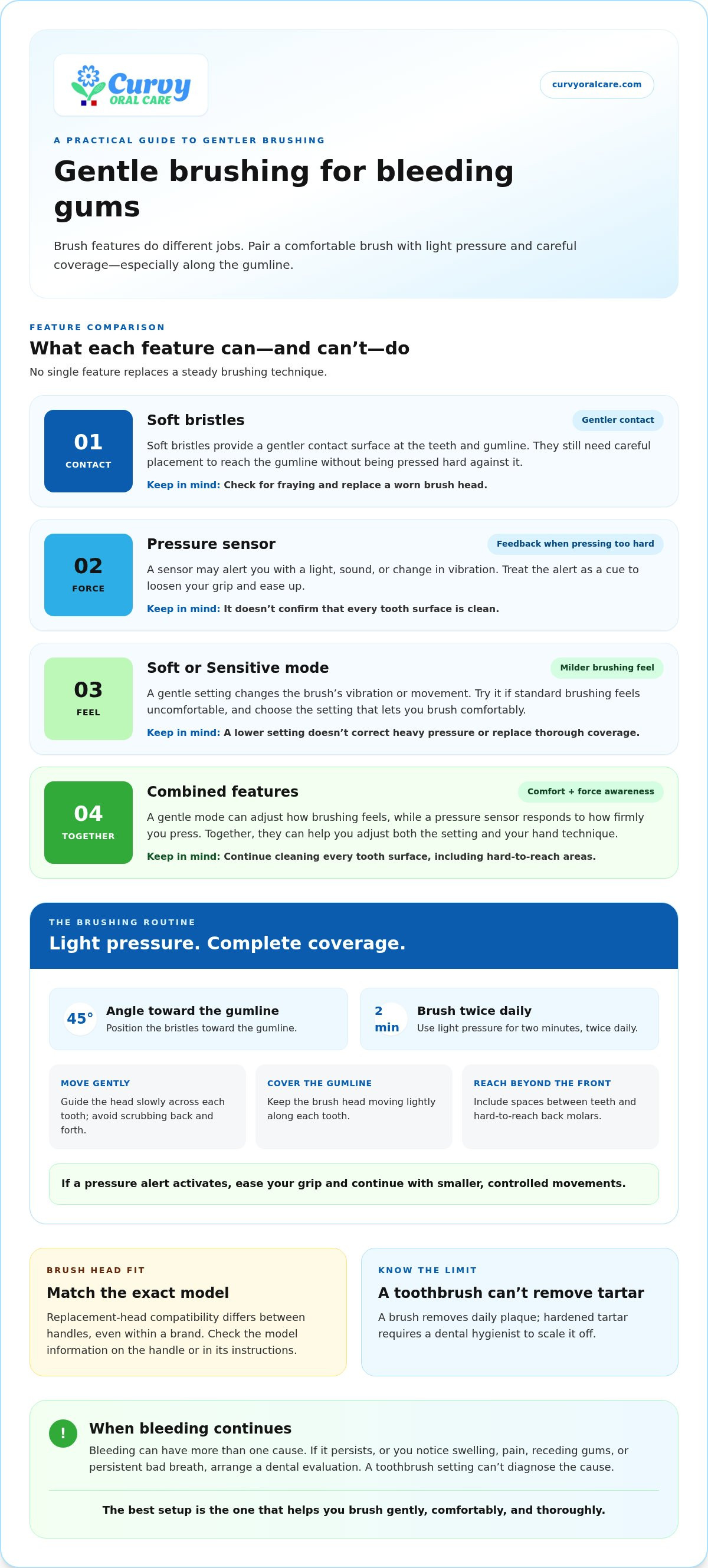
For bleeding gums, brush with light pressure, angle the bristles 45 degrees toward the gumline, and clean for two minutes, twice daily. Let the brush do the work instead of scrubbing back and forth. If a sensor activates, ease your grip and continue with smaller, controlled movements.
For replacement heads, match the head to the electric toothbrush’s exact brand and model. Compatibility differs between handles, even within a brand, so check the model information on the handle or in its instructions before choosing a head. Choose soft bristles if you need gentler contact.
| Option | What it offers | Useful for | What to consider |
|---|---|---|---|
| Pressure sensor | Feedback when pressing too hard | Brushing force awareness | Doesn’t confirm coverage |
| Soft bristles | Gentler contact at the gumline | Sensitive gums or recession | Still needs careful placement |
| Gentle mode | Milder vibration or movement | A more comfortable feel | Doesn’t correct heavy pressure |
| Combined features | Setting and force feedback | Adjusting comfort and technique | Keep cleaning every tooth surface |
Choose the combination that helps you maintain light pressure, comfortable brushing, and complete coverage. No single feature replaces a steady technique.
Cleaning modes and sensitivity settings
A toothbrush mode changes how brushing feels, but it doesn’t replace careful coverage. For sensitive gums, compare a Soft or Sensitive setting with standard Clean mode, then choose the one that lets you brush comfortably and consistently.
Soft or Sensitive mode is designed to provide a gentler-feeling clean. Standard Clean mode may also suit people with sensitive gums. Choose the setting that helps you move the brush head along the gumline without pressing hard. Try one setting at a time and notice whether brushing feels comfortable across your teeth, including the back molars.
A slower or gentler setting may feel more manageable if brushing too hard has made your gums sore. It won’t remove plaque between teeth or tell you whether every surface is clean. Guide the brush head tooth by tooth, pause where plaque collects, and clean between teeth with an interdental method. Follow the toothbrush maker’s instructions for changing modes.
For US shoppers, prioritize a soft brush head and a Soft or Sensitive mode, while keeping standard Clean available for comfortable daily use. Cost varies by model and features; compare what a brush offers with the settings and replacement heads you’ll actually use. Extra modes alone don’t guarantee gentler brushing or better cleaning.
Bleeding can be related to plaque buildup and gum inflammation, but a toothbrush setting can’t diagnose the cause. If bleeding persists, or you notice swelling, pain, receding gums, or persistent bad breath, arrange a dental evaluation. A dentist can examine your gums and identify whether the cause needs care beyond changes to brushing.
Professional dental cleaning addresses a different problem. A toothbrush can’t remove tartar once it forms; a dental hygienist must scale it off. This is distinct from daily plaque removal with a brush. If hardened deposits remain near the gumline, switching to Sensitive mode won’t remove them.
Choose Soft or Sensitive mode when it helps you brush gently, and use standard Clean if it feels comfortable. Keep the brush head moving rather than scrubbing, and clean the gumline, tooth surfaces, and hard-to-reach areas. For a sonic toothbrush and toothpaste option, explore this sonic toothbrush and toothpaste combination as part of your routine.
Why Do Gums Bleed?
Bleeding can signal gum irritation, but it doesn’t identify the cause. Notice where it happens and what changes alongside it.
Plaque-Related Gingivitis
Plaque is a sticky film that gathers on teeth, including the narrow edge beside the gums. If it remains there, gum tissue can become inflamed and bleed during brushing or interdental cleaning. This early gum inflammation is called gingivitis. Plaque-related bleeding may occur around several teeth where the film has collected, rather than in just one irritated spot.
Notice whether bleeding appears in one area, such as beside a back molar, or at several points along the gumline. Plaque can also collect between teeth, where a toothbrush head can’t clean fully. Use floss or another interdental cleaner for these spaces, and keep up regular dental visits. A dentist can assess gum tissue and deposits that home brushing can’t remove.
Brushing Technique and Gum Bleeding
An electric toothbrush can contribute to bleeding if its head is pressed forcefully against the gums or held in one place. A manual brush can also irritate tissue when used with a harsh scrubbing motion. Keep the head moving with light contact, and avoid pushing the bristles into tender areas. This can help distinguish technique-related irritation from bleeding that continues despite careful brushing.
Consider the pattern: bleeding that starts after you change your brushing habits may relate to contact or pressure, while recurring bleeding needs attention beyond choosing another brush. Gum recession can expose tender areas, and local irritation may affect one spot. Don’t try to diagnose the cause from appearance alone. Note the affected area and any swelling or pain for your dental appointment.
Claims about plaque removal need context. A named filament, such as Curen®, doesn’t by itself show how well a brush removes plaque or how comfortable it will feel. Look for evidence comparing performance, and consider practical factors such as head access and whether you can use the brush gently. No filament name replaces careful cleaning between teeth or professional assessment if bleeding persists.
Bleeding gums aren’t a reason to stop cleaning the area altogether. Continue gentle daily care, including cleaning between teeth, and avoid repeatedly testing a sore spot with extra pressure. If bleeding continues or comes with gum swelling, persistent bad breath, pain, or tooth mobility, arrange a dental evaluation. These changes deserve professional attention because a toothbrush can’t determine their cause.
Oscillating-rotating, sonic, and ultrasonic toothbrushes
Powered brushes use different movements, but no type is automatically gentle. Compare how each moves, how it feels at the gumline, and whether you can guide it without pressing too hard.
An oscillating-rotating brush moves its head back and forth in short rotations. Its small head can make it easier to position on individual teeth, including back molars. Keep it lightly against each tooth and move methodically rather than scrubbing. A dentist can help assess whether your technique reaches the gumline comfortably.
Sonic brushes use rapid vibration, generally up to 50,000 movements per minute. That movement helps sweep bristles across tooth surfaces as you guide the head. Sonic describes a movement pattern, not a promise of better results or greater gentleness. Use the brush head according to its instructions, and reduce pressure if brushing feels uncomfortable.
Ultrasonic brushes are described as operating at around 192 million movements per minute. They’re distinguished from sonic brushes by a vibration threshold of 20,000 Hz. Some descriptions state that ultrasonic brushes can clean up to 5 mm below the gumline. These figures distinguish the technology; they don’t establish that an ultrasonic brush is the best choice for bleeding gums.
Electric toothbrushes deliver thousands of strokes per minute, while a manual toothbrush depends on the movements you make by hand. An 11-year cohort study compared powered brushes with manual brushing and found better plaque control among people using powered brushes. That finding compares plaque control, not comfort for every individual or the results of every brush type.
Technique still matters with all three options. Brush twice daily, guide the head along the gumline, and cover the outer, inner, and chewing surfaces. Some electric brushes include a minute timer that signals when to change mouth quadrants every 30 seconds. Follow those alerts to divide brushing evenly, rather than spending the whole routine on front teeth.
Choose by comfort and control. If an oscillating head feels easier to position tooth by tooth, use light contact. If sonic vibration feels comfortable, guide it slowly over each surface. Don’t choose an ultrasonic model solely for a high movement figure. No powered brush fully cleans between teeth, so include interdental cleaning in your daily routine.
If a dentist has identified gum recession or ongoing bleeding, ask how to adapt your brushing technique. Persistent bleeding, swelling, pain, or receding gums deserves professional evaluation. The most useful brush is one you can use gently and consistently, with careful attention to the gumline and hard-to-reach teeth.
What electric toothbrush features are best for sensitive or bleeding gums?
Choose features that make the brush easy to control in your own mouth. A useful shortlist includes comfortable bristles, a manageable head shape, settings you can tolerate, and clear guidance for replacement heads. These details matter more than a crowded feature list. A brush should fit your routine without making tender areas harder to clean.
Consider where you struggle to reach. If the inside of a back tooth is awkward to clean, pay attention to the head’s shape and how easily you can position it there. If a handle feels difficult to steady, it may be harder to guide the brush carefully. Comfort is personal: a feature that helps one person may not suit another.
Read the product instructions to understand each control before brushing. A pressure alert is a prompt to adjust your touch, not a signal to avoid the area. A gentle mode can change the brushing sensation, but it doesn’t show whether plaque remains. Check that the bristles contact the tooth surface, rather than merely moving along its edge.
Brush-head fit deserves attention, too. Replacement heads aren’t automatically interchangeable across brands or models. Match the head to the handle’s exact model information, and replace it sooner if its bristles become visibly splayed. Keeping the correct replacement on hand can help you avoid continuing with a worn head just because it’s convenient.
Before choosing, compare the practical details that affect use:
- Control: Can you guide the head steadily around the teeth that are difficult to reach?
- Comfort: Do the bristles and vibration feel manageable on tender areas?
- Clarity: Are mode controls and pressure feedback easy to understand?
- Maintenance: Can you identify the correct replacement head for the handle?
If you’re unsure whether a feature helps, change one thing at a time. For example, keep your usual routine but try a softer-feeling setting, then notice whether brushing feels more comfortable. Don’t respond to discomfort by skipping the gumline. Persistent bleeding, swelling, or pain calls for dental evaluation; product features can’t identify the cause.
For readers considering a sonic toothbrush and toothpaste together, explore the sonic toothbrush and toothpaste combination as one option for a daily routine.
Curvy Oral Care: Sonic Toothbrushes
Curvy Oral Care offers sonic toothbrushes for people choosing an electric brush for a careful daily routine. If a conventional straight brush makes certain areas difficult to reach, Curvy’s angled toothbrushes are designed to help you access those spots with careful placement and technique.
Choose a brush that feels comfortable to guide along the gumline, and focus on steady, light movements rather than pressing harder. Curvy Oral Care offers replacement brush heads and brush head subscriptions to help you keep a suitable head on hand as part of regular oral care.
A toothbrush is a daily-care tool, not a substitute for dental evaluation. If bleeding persists, or you notice swelling or pain, arrange professional advice. Explore Curvy Oral Care’s sonic toothbrushes and angled options to find a brush for your daily routine.
Make your next brushing routine a gentler one
The best routine is one you can maintain without making brushing a source of worry. Choosing a gentle electric toothbrush for bleeding gums is one practical step; pairing it with patient, consistent care helps make oral health part of everyday well-being. Notice how your gums respond, and seek professional dental advice if bleeding continues or other changes appear.
Small adjustments can build confidence over time. Keep your focus on caring for your mouth, not brushing harder or chasing extra features. If you’re ready to explore a sonic toothbrush option alongside toothpaste, view the sonic toothbrush and toothpaste combination.
Healthy habits start with choices that feel manageable. Take the next step at a pace that works for you, and keep giving your gums steady care.
Frequently Asked Questions
How Long Until Gums Heal?
Healing time depends on why your gums are bleeding and whether the cause is addressed. Plaque irritation may respond to improved daily cleaning, while other causes may need different care. Notice whether bleeding becomes less frequent and whether other changes appear. If it persists or concerns you, a dental professional can examine your gums and recommend appropriate next steps.
How often should I replace the brush head?
Follow the replacement schedule for your specific toothbrush model, and inspect the head for visible wear. Splayed or damaged bristles may make accurate cleaning harder. Keep the handle’s brand and model details so you can select a matching replacement; brush heads aren’t universally interchangeable. If you’re unsure which head fits, follow the manufacturer’s product guidance.
What Else Can You Do To Look After Your Gums?
Build gum care into a wider routine: clean between teeth, clean your tongue, drink water, and choose balanced meals. Keep routine dental appointments so changes can be assessed before they become harder to manage. Research continues to investigate links between oral and general health; associations don’t prove that one condition causes another. Share relevant health changes with your dental or medical professional.
What Happens If You Ignore It?
Ongoing gum bleeding can leave an underlying problem unidentified. Gum inflammation may progress, and hardened tartar requires professional removal rather than ordinary brushing. Pay attention to persistent bad breath, gum swelling, pain, or teeth that feel loose. A dental professional can examine the tissues supporting your teeth and explain suitable care rather than relying on symptoms alone.
Which Electric Toothbrush Is Best For Gum Recession?
Look for a brush that lets you reach areas affected by recession without awkward wrist movements or uncomfortable contact. Head shape and handle control can influence how easily you position the brush around individual teeth. Bring your current brush to a dental appointment if you want feedback on your technique. A professional can consider where recession has occurred and tailor advice to your mouth.
Which gentle electric toothbrushes have pressure sensors and soft brush heads?
Check each model’s product details for both features; don’t assume a sensor is included just because a brush is labeled “gentle.” Curvy Oral Care’s Y Angled Sonic Toothbrush has soft bristles and an angled design to help reach difficult spots. It isn’t described as having a pressure sensor, so compare sensor claims separately when selecting a brush.
How do sonic and oscillating electric toothbrushes compare for bleeding gums?
Rather than choosing by technology name alone, consider which brush you can use comfortably and consistently. Notice how the handle feels, whether its head reaches your back teeth, and whether its movement feels comfortable against your gums. If one option makes you avoid certain areas, discuss that with your dentist when reviewing your home-care routine.
How long can gums bleed after switching to a soft electric toothbrush?
Switching brush heads won’t establish why bleeding is happening, so there isn’t one reliable duration for everyone. Note whether bleeding occurs in one spot or across several areas, and whether other symptoms appear. If it continues, worsens, or occurs with swelling or discomfort, arrange a dental assessment. A professional can check for causes that changing toothbrushes alone won’t address.
Health & Medical Disclaimer: This content is for general educational purposes only and isn’t a substitute for professional dental or medical advice, diagnosis, or treatment. Consult a qualified professional about persistent bleeding, swelling, pain, or other oral-health changes.

Article by
Aline Peixe Nebot
Aline Peixe Nebot is a Veterinarian and passionate advocate for better oral health, committed to raising awareness of oral health as a matter of public health. She actively promotes the importance of simple, effective oral care routines and works to educate the public about the often-overlooked link between oral health and overall systemic health. Her mission is to make better oral care knowledge accessible to everyone and encourage healthier habits for life.
Disclaimer
Disclaimer: The information provided in this article is intended for general educational and informational purposes only. It is not intended to replace professional medical, dental, or healthcare advice, diagnosis, or treatment.
Some content may be AI-assisted and is provided to support health education and awareness. While we strive to share accurate and up-to-date information, health recommendations and scientific evidence can evolve, and the information presented may not apply to every individual.
The connection between oral health and overall systemic health is an important and developing area of research. Associations discussed in this article should not necessarily be interpreted as proof of cause and effect.
Always consult a qualified dentist, physician, or other healthcare professional regarding your individual health, symptoms, medications, or treatment decisions. Do not delay or discontinue professional care based on information presented in this article.
This content is for education and awareness—not diagnosis or treatment.