
How to Choose SLS-Free Foaming Toothpaste for a Sensitive Mouth
Less foam doesn’t mean less cleaning. An SLS-free foaming toothpaste may suit a sensitive mouth, especially if sodium lauryl sulfate seems to irritate your oral tissues or you’re prone to canker sores. SLS creates familiar foam, but extra lather doesn’t provide an added tooth-cleaning benefit.
If toothpaste leaves your mouth irritated, dry, or uncomfortable, it’s reasonable to wonder whether the formula is contributing. SLS affects people differently, so not everyone needs to switch. But a gentler-feeling option may make brushing more comfortable.
You’ll learn how SLS works as a foaming agent, what research suggests about irritation and canker sores, and how to decide whether an SLS-free toothpaste may suit you. We’ll also cover what to look for in a formula, why fluoride may matter in your daily routine, and how comfortable brushing can support consistent care for your teeth and gums.
Key Takeaways
- Judge toothpaste by its ingredients and how comfortable it feels, not by how much it foams.
- Notice whether oral irritation or recurring canker sores seem to change when you use a different formula.
- Choose a toothpaste that supports your oral-care needs, and consider whether it contains fluoride.
- Build brushing around the gumline and hard-to-reach areas, not just the visible fronts of your teeth.
- A toothbrush designed to reach difficult spots can complement a comfortable toothpaste in your daily routine.
Should I Use an SLS-Free Toothpaste?
An SLS-free toothpaste may be worth trying if sodium lauryl sulfate seems to irritate your mouth. These formulas can clean without SLS and may use other cleansing agents to disperse and remove food particles.
Cleaning Without SLS
SLS-free toothpaste cleans with its other ingredients, while brushing physically disrupts plaque on tooth surfaces. Foam level alone doesn’t tell you whether a formula is cleaning effectively.
A toothpaste without SLS can still support routine cleaning and may contain fluoride. Check the ingredient label for fluoride and choose a formula that suits your needs.
Technique matters: brush the gumline and tooth surfaces rather than relying on lather to reach every area. An SLS-free formula can clean with less foam, so focus on your brushing pattern instead of judging by the bubbles.
Foam’s Role in Cleaning
Sodium lauryl sulfate, often shortened to SLS, is a surfactant that helps toothpaste foam and disperse food particles. Bubbles create a familiar sensation, but extra foam doesn’t provide an additional tooth-cleaning benefit.
That distinction can help if low-foam toothpaste feels unfamiliar at first. Less lather doesn’t mean you’ve skipped cleaning; what matters is brushing across the teeth and along the gumline. Foam filling your mouth doesn’t prove you brushed the back molars or the edges beside your gums.
Rather than using suds as a measure, focus on brushing all tooth surfaces consistently. Plaque can collect near the gumline, so a controlled brushing motion matters more than dramatic foam.
Alternative Foaming Agents
SLS-free toothpastes may use other cleansing agents to disperse and remove food particles. Ingredients vary by formula, so read the label instead of assuming every SLS-free toothpaste uses the same substitute.
For a practical comparison, look for “sodium lauryl sulfate” in the ingredient list, then check which other cleansing ingredients the formula contains. If you want fluoride in your routine, check for it separately. SLS-free formulas are available with and without fluoride.
Switching to a lower-foam formula can change how brushing feels. Give yourself time to focus on coverage, including the gumline and back teeth, rather than adding more toothpaste to recreate the lather of an SLS formula.
Product choice is only one part of a thorough routine. A toothbrush that helps you reach difficult areas may support careful brushing; for example, an angled sonic toothbrush is designed to help access hard-to-reach spots.
Possible irritation of gums and oral tissue
Sodium lauryl sulfate, or SLS, can irritate or dry oral tissue for some people. A sensitive mouth may feel uncomfortable during brushing or afterward, especially if gums are already tender. SLS-free toothpaste removes that ingredient, but the formula still deserves a careful look.
Yes. SLS-free toothpaste can contain other ingredients, and people may not tolerate every formula equally. Check the full ingredient list and notice whether discomfort changes after switching. The “SLS-free” claim alone doesn’t tell you how the rest of the formula will feel in your mouth.
SLS is a surfactant, an ingredient that helps ingredients mix and creates foam. Research findings summarized for this topic suggest SLS may irritate or dry oral tissue and may worsen discomfort for people with sensitive gums or gingivitis. Irritation can also depend on exposure: SLS may irritate skin at high concentrations when left in contact for a long time.
In oral-care products, SLS has also been reported to affect lecithin, a protective layer on cell surfaces, and disrupt the balance of oral microflora. These proposed effects help explain why an ingredient that works as a cleanser might feel uncomfortable to some people. They don’t mean everyone who uses SLS toothpaste will experience irritation.
Look for a pattern rather than drawing conclusions from one brushing. If your mouth feels dry or sore after using a particular toothpaste, compare its ingredients with those of another formula and notice whether the sensation changes. Avoid changing several oral-care products at once, which makes it harder to identify what may be contributing.
Trying an SLS-free formula can help you see whether removing SLS makes brushing more comfortable. Still, SLS-free doesn’t mean ingredient-free. Other cleansing agents and formula components vary, so review the full ingredient list and consider fluoride when choosing toothpaste for daily use.
Persistent bleeding, swelling, pain, or mouth sores that don’t heal call for professional evaluation. A toothpaste change doesn’t explain every symptom, and a dental professional can assess ongoing changes in your gums or oral tissue. For an option that pairs toothpaste with a travel case, you can explore this toothpaste and travel case set as part of your routine.
SLS as a foaming agent in toothpaste
Sodium lauryl sulfate, often abbreviated SLS, is a surfactant used in toothpaste as a foaming agent. A surfactant helps ingredients mix and spread while brushing. As the toothbrush moves through toothpaste and saliva, SLS creates familiar lather. The foam can carry food particles through the mouth, but bubbles aren’t the same as plaque removal. SLS’s main visible effect is the sudsy texture many people associate with a thorough clean.
Think of brushing as the active cleaning step. Your toothbrush contacts tooth surfaces and disrupts plaque, including along the gumline. SLS supports foaming and dispersing, but foam itself doesn’t add a separate tooth-cleaning benefit. A mouth full of bubbles doesn’t show that you reached the back molars or brushed each surface. Coverage depends on brushing, not on how high the lather rises.
The ingredient name on a toothpaste label may be more familiar than the chemistry behind it. “Sodium lauryl sulfate” identifies SLS, while “lauryl” refers to the ingredient’s chemical structure. SLS can be made synthetically or from coconut oil and palm oil. Its source doesn’t change its role in toothpaste: it’s a surfactant that helps produce foam and disperse food particles during brushing.
SLS also appears in other care products, where it’s used for cleansing or foaming. That shared function doesn’t mean every product behaves identically; toothpaste is formulated for use in the mouth. When comparing toothpaste labels, look for sodium lauryl sulfate by name. Foam level can explain a product’s texture, but it doesn’t show how well you brushed.
For a useful comparison, consider lather and brushing coverage separately. Brush each tooth surface, pay attention to the gumline, and reach the back teeth. If you switch to a formula without SLS, less foam may feel unfamiliar at first. Keep the same careful brushing pattern instead of adding toothpaste to recreate the bubbles. Foam is a sensation, not a reliable measure of cleaning.
Understanding SLS’s role makes ingredient choices more practical. It’s a foaming agent, not the motion that removes plaque from tooth surfaces. That distinction matters if you prefer a lower-foam texture or are assessing how toothpaste feels. Compare the ingredient list, then focus on consistent brushing and areas foam can’t confirm, such as the gumline and spaces beside the back molars.
SLS sensitivity and canker sores
Some clinical studies have found that toothpaste containing sodium lauryl sulfate may contribute to mouth ulcers, inflammation, or epithelial sloughing. Epithelial sloughing means the surface layer of oral tissue sheds, which can feel tender or raw. These findings concern some people, not everyone who uses SLS toothpaste. Recurrent aphthous stomatitis is the clinical name for recurring canker sores. An SLS-free toothpaste may be worth considering if ulcers repeatedly coincide with brushing discomfort.
One early clinical study reported that aphthous ulcer counts fell from 14.3 to 5.1 after participants changed from SLS-containing toothpaste to an SLS-free formula. That result gives a concrete reason researchers have examined the connection, but it isn’t a prediction for every person. A systematic review by the Authors of the systematic review included four crossover trials on SLS-free dentifrice and recurrent aphthous stomatitis. Those trials examined whether changing toothpaste could affect recurring ulcers.
One possible explanation is irritation of the mouth’s mucosal lining, the soft tissue inside the cheeks and lips. If that surface becomes irritated or eroded, an ulcer may feel more uncomfortable. SLS isn’t the only possible contributor; other ingredients, friction, and individual factors can matter too.
If you want to try a toothpaste change, make it a clear comparison. Note the formula you use, check whether its ingredients include sodium lauryl sulfate, and observe any changes in brushing comfort or sores. Keep other oral hygiene habits steady, including your brushing technique and interdental cleaning. Changing one product at a time makes patterns easier to notice than replacing several items together.
Choose a formula that still fits your oral-care needs, including whether you want fluoride. SLS-free products are available with and without fluoride, so “SLS-free” doesn’t describe the whole formula. Read the ingredient panel rather than assuming every alternative uses the same ingredients. If sores keep returning, disrupt eating or brushing, or fail to heal, seek professional evaluation instead of relying on toothpaste changes alone.
Comfort supports consistent hygiene. If a particular toothpaste seems to aggravate your mouth, switching to an SLS-free option can be a practical adjustment to discuss as part of your routine. Keep brushing carefully along the gumline and cleaning between teeth; changing a foaming ingredient shouldn’t mean skipping those daily steps. Persistent oral changes deserve attention, even if a product switch seems to help.
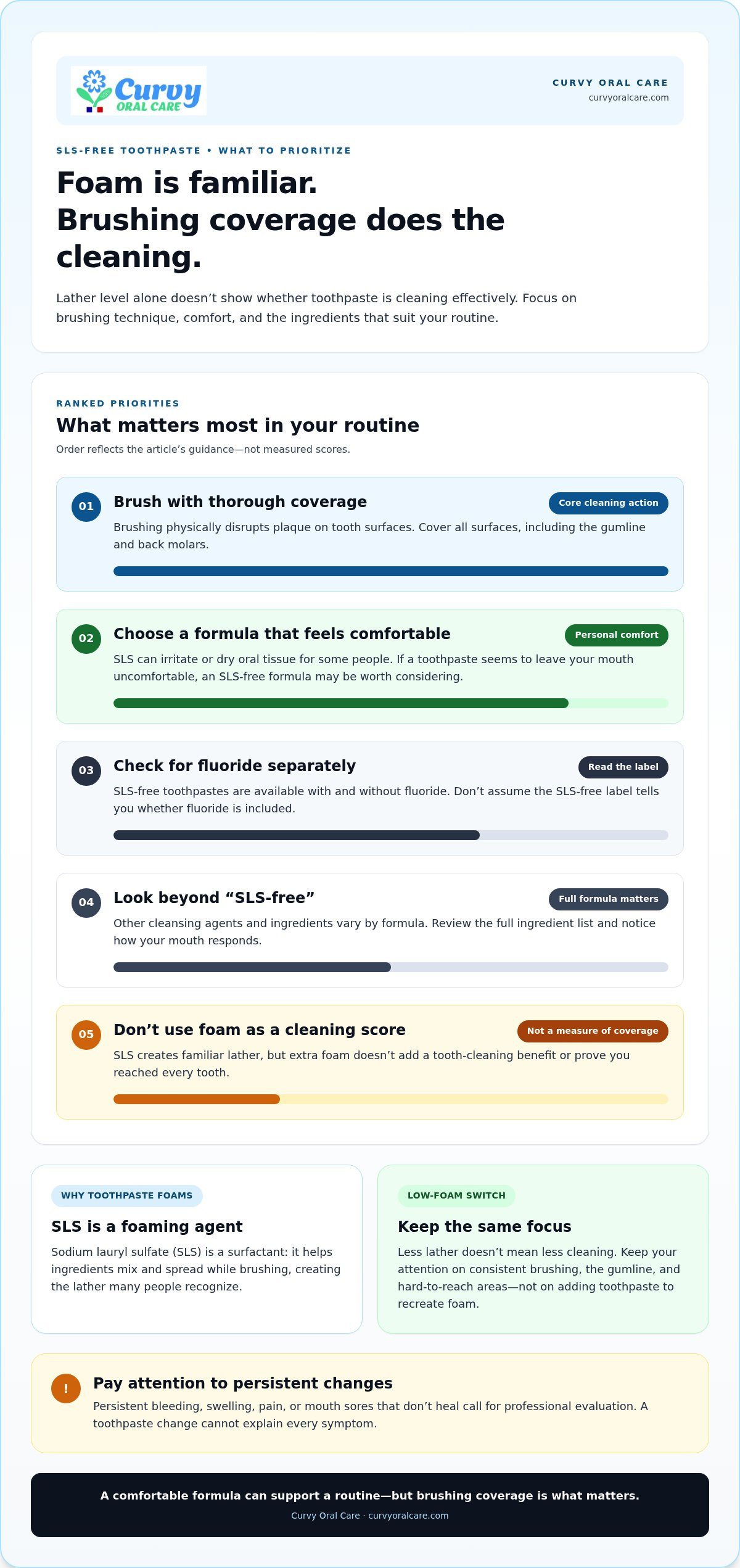
SLS-free toothpaste for sensitive mouths
An SLS-free toothpaste may suit people who notice oral irritation or recurring canker sores with certain formulas. Sodium lauryl sulfate is a detergent and foaming agent, but removing it doesn’t automatically make every alternative right for every mouth. Compare the complete ingredient list, your comfort, and whether you want fluoride.
How much does SLS-free sensitive toothpaste cost in the United States? Prices depend on the brand, formula, package size, and retailer. Compare the amount of toothpaste and its ingredients instead of assuming all SLS-free formulas have the same price.
Which SLS-free toothpastes contain fluoride for cavity protection? SLS-free toothpastes are available with and without fluoride. Check the product label for fluoride as a separate ingredient; “SLS-free” alone doesn’t tell you whether it’s included.
For a sensitive mouth, start with the ingredient that concerns you. Look for “sodium lauryl sulfate” on the label, then compare the rest of each formula. Another cleanser may replace SLS, and formulas differ. Keep your brushing routine consistent while trying a different toothpaste, so you can notice whether comfort changes without altering several habits at once.
Comfort is only one part of choosing toothpaste. Consider whether it provides fluoride, which supports cavity protection, and whether its taste and texture help you brush consistently. A low-foam formula may feel different from a familiar detergent-based toothpaste. Don’t use bubbles as your test; focus on brushing all tooth surfaces and along the gumline.
When comparing two tubes, check each ingredient panel for both SLS and fluoride. Then choose the formula that fits your needs and daily routine. SLS-free doesn’t mean fluoride-free, nor does it mean every ingredient has been removed. The label provides details that the front-of-package description may not.
Brushing needs to reach beyond visible tooth surfaces. Pay attention to the gumline, spaces between teeth, and back molars, where plaque can collect. Clean between teeth with an appropriate interdental method and maintain regular dental visits. These habits support gum health regardless of how much toothpaste foams.
If you’re considering toothpaste options for your routine, explore the toothpaste and travel case set and review its product details and ingredients before choosing.
Curvy Oral Care: Sonic Toothbrushes
Curvy Oral Care offers sonic and angled toothbrushes to support careful daily brushing alongside a toothpaste that feels comfortable for your mouth. If reaching the gumline, back molars, or other difficult spots is a challenge, an angled toothbrush is designed to help access those areas as you brush. It doesn’t replace choosing a suitable toothpaste, but it can support a routine focused on thorough plaque removal.
Choose the brush style that suits your routine, and brush gently along the gumline. For persistent irritation or sores, seek advice from a dental professional rather than relying on a toothbrush change.
Visit Curvy Oral Care to explore its toothbrush options or contact the team with questions.
Make Your Next Brush Feel More Comfortable
Your daily routine should feel manageable, not like something you endure. If an SLS-free foaming toothpaste for a sensitive mouth makes brushing more comfortable, let that change support consistent habits. Oral health is part of overall well-being, and research continues to investigate how the health of the mouth relates to the rest of the body.
Comfort matters, but don’t ignore symptoms that continue. Persistent mouth sores, pain, or gum changes deserve professional attention. A dental professional can help assess what’s happening, while consistent daily care supports a healthier mouth.
Choose products that fit your needs, then give your routine room to become consistent. If you’d like to explore a toothpaste set, view the toothpaste and travel case set. Small, comfortable habits can make caring for your mouth feel more sustainable.
Frequently Asked Questions
What Is Sodium Lauryl Sulfate?
Sodium lauryl sulfate is the full ingredient name behind the abbreviation SLS. Spotting that name on a toothpaste label can help you compare formulas without relying on front-of-package descriptions. SLS may be made synthetically or from coconut or palm oil. Its origin doesn’t tell you whether a particular formula will feel comfortable, so consider the complete ingredient list and your own experience.
Can SLS cause long-term damage?
Current information does not establish that SLS toothpaste causes lasting damage to teeth. SLS in oral-care products has not been found to negatively affect tooth enamel. Some people may experience oral discomfort, but persistent sores or other changes need professional assessment rather than assumptions about the cause. If a symptom continues, note which products you use and share that information with a dental professional.
How does SLS work in toothpaste?
SLS helps toothpaste ingredients spread during brushing and creates the lather associated with many formulas. That lather can shape how brushing feels, but it isn’t a reliable way to assess whether you covered every area. Follow a consistent path around your mouth, including the inner tooth surfaces and back teeth, instead of adding more paste to create extra suds.
Is SLS necessary for cleaning teeth?
No. SLS is an optional ingredient, so its presence doesn’t determine whether a toothpaste is right for you. Compare labels for features that matter to your routine, such as fluoride content and ingredients you prefer to avoid. If you switch formulas, keep your brushing habits steady. That makes it easier to judge whether the new product suits your needs.
What effect does SLS have on gums?
People can respond differently to toothpaste ingredients, so pay attention to changes in comfort rather than assuming one ingredient explains every symptom. If you notice an ongoing change, record when it occurs and which toothpaste you used. Persistent bleeding, swelling, or pain deserves professional evaluation. Toothpaste choice can be part of daily care, but it shouldn’t replace assessment of continuing gum concerns.
What is SLS-free foaming toothpaste for sensitive mouths?
It’s toothpaste made without sodium lauryl sulfate that may still foam through other ingredients. Formulas differ, so the phrase alone doesn’t tell you whether a toothpaste contains fluoride or which alternative cleanser it uses. Read the ingredient panel and consider the texture, flavor, and ingredients that matter to you. The best fit is one you can use comfortably and consistently.
Does SLS-free toothpaste reduce mouth irritation or canker sores?
Some people may find that switching to an SLS-free formula helps with recurring discomfort or canker sores. To assess your experience, change one toothpaste at a time and keep other oral-care habits consistent. Don’t treat a product change as a diagnosis. Sores that persist, repeatedly return, or make eating difficult should be evaluated by a dental or medical professional.
Which SLS-free toothpastes are suitable for sensitive teeth and gums?
Look for an SLS-free formula that also matches your other needs, especially whether you want fluoride for cavity protection. SLS-free options are available with and without fluoride, so check the ingredient panel rather than assuming. Taste and texture can affect whether a product suits your routine. If tooth sensitivity or gum symptoms continue, ask a dental professional for advice tailored to your situation.
Health & Medical Disclaimer: This content is for general educational purposes and isn’t a substitute for professional dental or medical advice, diagnosis, or treatment. Seek advice from a qualified professional about persistent symptoms or individual health concerns.

Article by
Aline Peixe Nebot
Aline Peixe Nebot is a Veterinarian and passionate advocate for better oral health, committed to raising awareness of oral health as a matter of public health. She actively promotes the importance of simple, effective oral care routines and works to educate the public about the often-overlooked link between oral health and overall systemic health. Her mission is to make better oral care knowledge accessible to everyone and encourage healthier habits for life.
Disclaimer
Disclaimer: The information provided in this article is intended for general educational and informational purposes only. It is not intended to replace professional medical, dental, or healthcare advice, diagnosis, or treatment.
Some content may be AI-assisted and is provided to support health education and awareness. While we strive to share accurate and up-to-date information, health recommendations and scientific evidence can evolve, and the information presented may not apply to every individual.
The connection between oral health and overall systemic health is an important and developing area of research. Associations discussed in this article should not necessarily be interpreted as proof of cause and effect.
Always consult a qualified dentist, physician, or other healthcare professional regarding your individual health, symptoms, medications, or treatment decisions. Do not delay or discontinue professional care based on information presented in this article.
This content is for education and awareness—not diagnosis or treatment.